Why Students Cheat in Exams?
Examinations are one of the most important measures of a student’s academic potential. Students are often rewarded based on their performance, which creates pressure to excel. Unfortunately, this pressure sometimes leads students to cheat in exams. Understanding why students cheat in exams is crucial for educators, parents, and students themselves, as it helps address the root causes of academic dishonesty.
Main Reasons Students Cheat in Exams
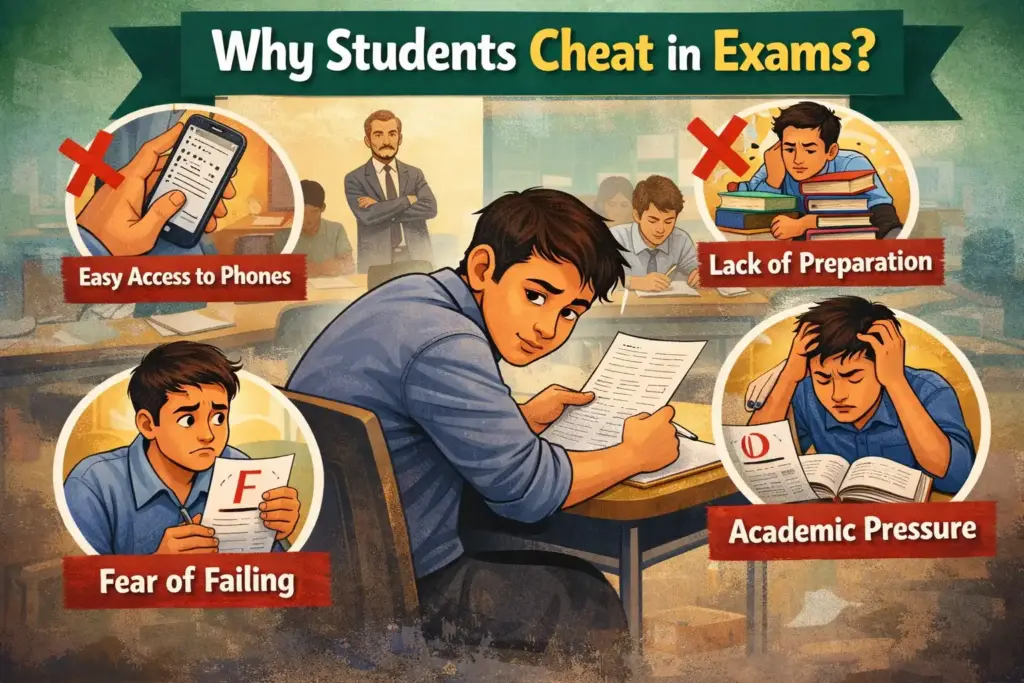
1. Fear of Failure
One of the primary reasons students cheat is the fear of failing. Many students feel intense pressure to achieve high grades to remain competitive in academics and future careers. According to research, this fear often drives students to use unfair means during exams to ensure passing or scoring well.




2. Lack of Knowledge and Preparation
A major contributor to cheating is insufficient knowledge or preparation. Students may resort to dishonest methods because they feel unprepared to answer exam questions. Several factors contribute to this lack of knowledge, including:
-
Inattentive behavior during classes
-
Irregular or poor attendance
-
Unsatisfactory preparation before exams
-
Inefficient use of resources such as textbooks, reference materials, and study guides
These factors often lead to a lack of confidence in their ability to perform, prompting students to cheat as a coping mechanism.
3. Low Confidence in Their Own Knowledge
Many students cheat because they doubt the accuracy of their answers. When students are unsure about their knowledge, they may rely on unfair means to verify or secure their answers. This lack of self-confidence highlights the need for better support and guidance in the learning process.
4. Role of Teachers and Instructors
Responsibility for exam cheating does not lie solely with students. Teachers and course instructors play a critical role in ensuring students understand the material. When concepts are not well explained or misconceptions are left unaddressed, students may feel compelled to cheat. Effective teaching, regular feedback, and interactive learning can help build student confidence and reduce the temptation to use unfair methods.
Cheating in exams is a complex issue influenced by fear of failure, lack of preparation, low confidence, and gaps in teaching. Addressing these factors requires collaboration between students, teachers, and institutions. By improving study habits, increasing classroom engagement, and fostering a supportive learning environment, students can rely on their own knowledge and integrity to succeed in exams.
