Future Indefinite Tense In Urdu And English Examples Sentence Structure
Future Indefinite Tense in Urdu and English examples of sentence structure and exercise are all here. In this guide, you’ll learn the definition, identification, and usage of future tense using “Will” and “Shall”. You’ll also see how the structure changes in negative, interrogative, and negative interrogative forms.
Future tense is used to express an action that will happen later. It’s one of the most commonly used tenses in spoken and written English. For example: “I will do something” or “He shall visit tomorrow.” Let’s now go deeper into rules and practice exercises for this tense.

Definition of Future Indefinite Tense
Future Indefinite Tense is used to describe an action that will take place in the future. In other words, it helps us predict or announce a future event or plan.
Example: I will go to school. / This team will win the match.
Sentence Structure and Tense Formulas
Simple Future Sentence
Structure: Subject + Shall/Will + 1st form of verb + Object
Negative Sentence Structure
Structure: Subject + Shall not/Will not + 1st form of verb + Object
Interrogative Sentence Structure
Structure: Shall/Will + Subject + 1st form of verb + Object + ?
Future Indefinite Tense Examples and Exercise
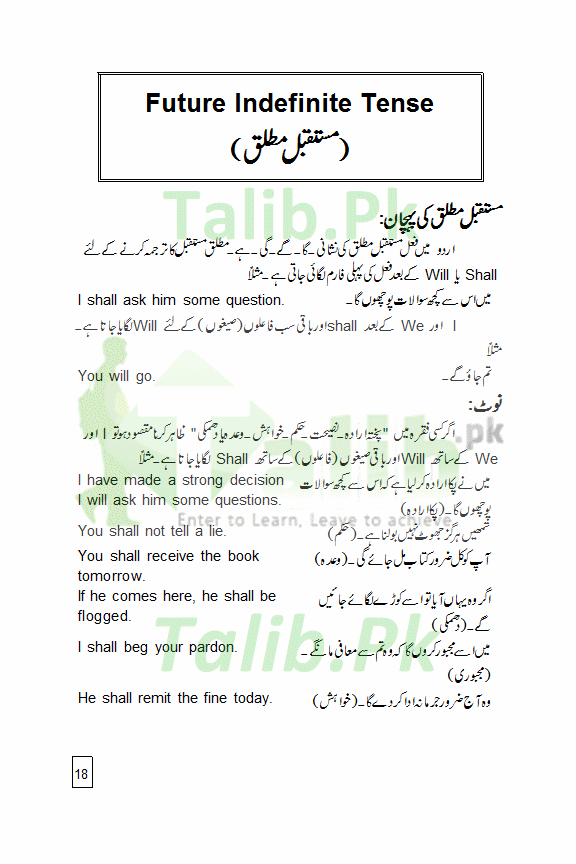
Below is a practice exercise with both Urdu and English sentences for better learning. It is strongly recommended that you read and practice these sentences to improve your grasp of the future tense structure. Repetition and real-life usage are key to mastering any tense.
Visual Examples – Urdu Charts and Sentences

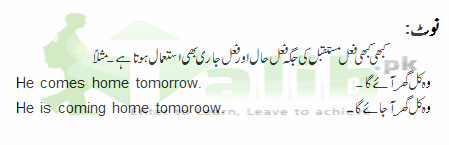
Also Read – Present, Past, and Future Tenses
| Present Tenses | Past Tenses | Future Tenses |
| Present Indefinite | Past Indefinite | Future Indefinite |
| Present Continuous | Past Continuous | Future Continuous |
| Present Perfect | Past Perfect | Future Perfect |
| Present Perfect Continuous | Past Perfect Continuous | Future Perfect Continuous |
Common Mistakes in Future Indefinite Tense
Learners can improve their grammar by avoiding these common errors.
| Incorrect sentence | Correct sentence | Reason |
|---|---|---|
| She will goes home. | She will go home. | Use V1 after will. |
| He will not eats rice. | He will not eat rice. | Keep the verb in its first form. |
| Will she comes tomorrow? | Will she come tomorrow? | Use V1 in questions. |
| I will going there. | I will go there. | Do not use V-ing after will in this tense. |
| He wills help me. | He will help me. | Will does not take s. |
Remember one simple rule: will + first form of the verb. This pattern works for positive sentences, negative sentences, and questions.
What is the formula for future indefinite tense?
The positive formula is Subject + will + V1 + object. For negative sentences, use Subject + will not + V1 + object. For questions, use Will + subject + V1 + object?
How do we identify future indefinite tense in Urdu?
Look for future endings such as گا، گی، گے. These endings commonly show that an action will happen in the future.
Which verb form follows will?
The first form of the verb follows will. For example, say “He will write,” not “He will writes.”
Can we use won’t in future indefinite tense?
Yes. Won’t is the short form of will not. For example, “I won’t go there” means “میں وہاں نہیں جاؤں گا۔”
What is the difference between future indefinite and future continuous tense?
Future indefinite describes a future action, such as “I will study.” Future continuous describes an action that will be in progress at a future time, such as “I will be studying.”
Final Words on Future Indefinite Tense Practice
Now you’ve seen the full breakdown of Future Indefinite Tense in Urdu and English with examples, structure, and rules. The next step is to practice the given sentences regularly.
If you still have questions or confusion, feel free to drop your query in the comment box. We’ll guide you further with clear examples and answers.

this is useful for learn tenses
Awesome!
Yeh فعل حال (present indefinite) or فعل مستقبل (future indefinite) hota hai??
Nice Explanation
Good point
Plz mujh english seekh de
Dear Afooj Faima,
I can only suggest you to spare some time for learn tenses first and practice on daily basis and make some friends and then chat with them in english hope you will be able to learn english.
I got most knowledge from this website
میں نے ارادہ کیا. یہ تو past indefinite tense ہے نا اس میں تو have کا استعمال نہیں کیا جاتا. تو پھر آپ نے کیوں i have made strong decision میں have کا استعمال کیا.
Yeah you are right